

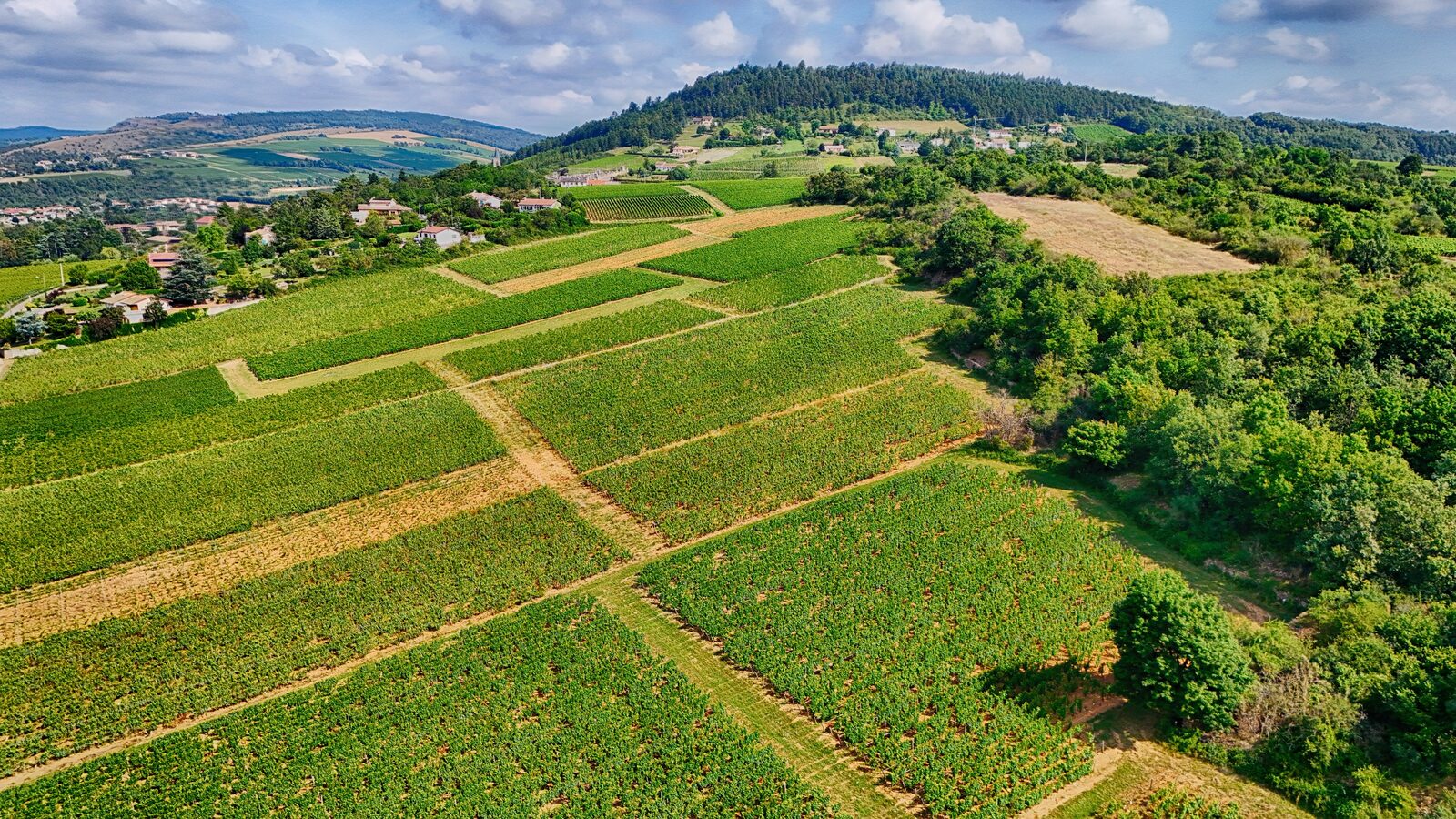
The headline of the 2023 vintage in Burgundy is statistical. According to the Bourgogne Wine Board (BIVB), the harvest came in at roughly 1.9 million hectolitres — the largest crop the region has ever recorded. To put that in scale: it is bigger than the already-generous 2022, and meaningfully bigger than the rolling five-year average. After three consecutive small-to-tragic vintages (2021 frost, 2024 rot), nature finally delivered abundance.
The market has not, however, delivered the correction one might expect from abundance. Prices on en-primeur 2023s have arrived at, or just below, the prices of the sky-high 2022s, with only the most price-sensitive growers blinking. The justification, repeated across the négoce and the celebrated domaines alike, is the catastrophic 2024 — a vintage so cold, grey, and disease-pressured that some parcels were left unpicked and the official figures, when they come, may be the smallest on record.
So Burgundy collectors are being asked to absorb 2023 prices because of what 2024 didn't produce. It is the kind of argument the region's growers have grown comfortable making.
The wines themselves are a different conversation, and a more interesting one.
The growing season, briefly
The 2023 growing season was warm but not heatwave-warm — closer in shape to 2017 than to 2019 or 2020. A clean flowering produced large bunches. Summer ran temperate through July, then turned hot in late August, with a brief, dangerous spike that threatened to collapse acidity in the white-wine grapes.
The producers who picked their whites before 10 September — among them Roulot, Coche-Dury, Lafon, Boisset under Greg Patriat's hand — caught the freshness. Those who waited a week were caught by both ripeness and rain. This is the single most important dividing line in the white 2023s: pick date.
The reds had a longer window. Pinot Noir tolerates ripeness better than Chardonnay, and the late-August heat that worried the white-wine producers actually finished the reds well. Most red harvests ran from early to mid-September, with no widespread heat damage.
What the wines actually taste like
Charm is the word that recurs. The 2023 reds are medium-bodied, red-fruited, perfumed, and approachable in youth — closer in spirit to 2022 than to the heavier 2019 or 2020. Acidities are slightly higher than 2022. There is no significant heat-stress character in the reds I have tasted, which I take as a relief; some of the recent hot vintages produced wines where village, premier cru, and grand cru all started to taste like the same wine in different glassware.
The 2023s do not blur this way. The hierarchy of terroir — what separates a village wine from a grand cru — is, in 2023, legible again. Jasper Morris MW has pointed to the comparison with 2017, which is a defensible reference: medium-bodied, fresh, red-fruit-driven, accessible early without being short-lived. I would add that the best 2023s have more aromatic detail than the comparable 2022s; the cool-driven 2021s, where the growers got the picking right, still set the high bar for finesse this decade.
The whites, where well-made, are excellent. The acidity is preserved, the fruit is taut, the texture is fine. The whites that came in late are a different story — flatter, broader, less age-worthy. Producer discipline matters more than usual.
Where the value sits
Jancis Robinson's standing advice for Burgundy applies in 2023 with sharper force than usual: seek out a combination of the less famous appellations and the most adept producers in them.
This is not a year to chase Le Chambertin from a famous name at the eye-watering ask. It is a year to find the careful grower working a Pernand-Vergelesses 1er Cru, a Saint-Aubin, a Marsannay, a Maranges, a Mercurey from a producer who farms it like a grand cru and prices it like the appellation it actually is. The yields gave them plenty of fruit; the season gave them clean fruit; the modesty of the appellation keeps the price honest.
The other reliable value path: Bourgogne Rouge and Bourgogne Blanc from grand domaines who source from their own declassified parcels. In a generous year like 2023, these wines often punch two or three levels above their appellation. Roulot's Bourgogne Blanc, Comte Armand's Bourgogne Rouge, Hudelot-Noëllat's regional bottlings — these are the wines a serious collector buys by the case.
A working list — what to seek out
This is a guide, not a portfolio. We curate specific allocations for clients privately. But if you are buying 2023 Burgundy on your own this season, here is the shape of where we are pointing people:
Whites — the early pickers
Domaine Roulot, Meursault
Picked between 28 August and 8 September. Jean-Marc and Alix's discipline shows: precision, salt, structure. The Bourgogne Blanc is the value entry; the village Meursault is the working bottle; the premier crus are extraordinary, as usual.
Domaine Jean-Claude Boisset (Greg Patriat selections)
Patriat made what may be the best 2023 whites at any négociant level — a function of meticulous pick-date discipline across the partner growers he works with. Look at Corton-Charlemagne and Chevalier-Montrachet if you can find them.
Domaine Pierre-Yves Colin-Morey, Saint-Aubin
Saint-Aubin is the value white appellation of the Côte de Beaune and PYCM is its sharpest practitioner. En Remilly 1er Cru is the bottle to find.
Reds — the careful growers in undervalued appellations
Domaine Sylvain Pataille, Marsannay
The most ambitious work being done at the northern edge of the Côte de Nuits. The lieux-dits — Longeroies, Clos du Roy — drink like village Gevrey at a fraction of the cost.
Domaine de Bellene, Beaune (Nicolas Potel)
Potel cut his 2023 prices back to 2019 levels — a rare honest move. The Savigny-lès-Beaune and Beaune premier crus are the value of the vintage.
Domaine Hudelot-Noëllat, Vougeot
The grand crus are now allocation-only and priced accordingly, but the Bourgogne Rouge and the village Vosne-Romanée from this house are still, by Burgundy standards, sane.
What to leave on the shelf
The first-tier celebrity Burgundies — the wines that produced thousand-pound village bottlings in 2022 — have not corrected in 2023, and in our view the price-to-quality equation is no longer defensible at that altitude. We are not buying them for clients this year unless the client specifically wants the label. There is too much excellent 2023 available at a third the cost.
Also worth caution: any 2023 Chardonnay from a producer whose pick was late. The market will tell on these wines by 2027.
The verdict
Buy the 2023 vintage. Buy it carefully, from the producers who picked their whites early and farmed their reds thoughtfully. Buy from the appellations that are not on the cover of the wine magazine. Drink the whites young (three to five years for most village wines; longer for premier and grand cru, but they will be charming early too). Hold the reds five to fifteen years depending on the level; the village wines will give early; the premier crus are built for the medium term.
This is not a vintage of the century. It is a vintage of resumed proportion after several years of heat-distorted Pinot Noir, and that, in Burgundy, is its own kind of news.
If you want our specific allocation list for the 2023 vintage — producers we are working with directly, target wines, target prices — that conversation lives in private consultation. Get in touch and we will open the file.
SHE Nose Wines Editorial
West Palm Beach · May 2026