
The decanter is a piece of glassware with a public-relations problem. Either it is treated as ceremony — pulled out for every dinner-party Pinot regardless of whether it needs the air — or it is dismissed as theatre, an old-fashioned ritual you can skip in favour of a more aggressive pour. Both treatments miss what the decanter actually does.
A decanter does exactly two things, and they have nothing to do with each other. Confusing them is the most common service mistake we see in our clients' homes. Understanding them is the difference between a wine that opens up and a wine that you have just bruised.
Job one — aeration
Young, structured wines are tightly wound. The aromas are present but trapped under firm tannin and a reductive lid (sometimes literally — a struck-match or rubber-tyre character from the bottle being closed too tightly for too long). Contact with oxygen — surface area times time — releases the aromas, softens the tannin, dissipates the reduction.
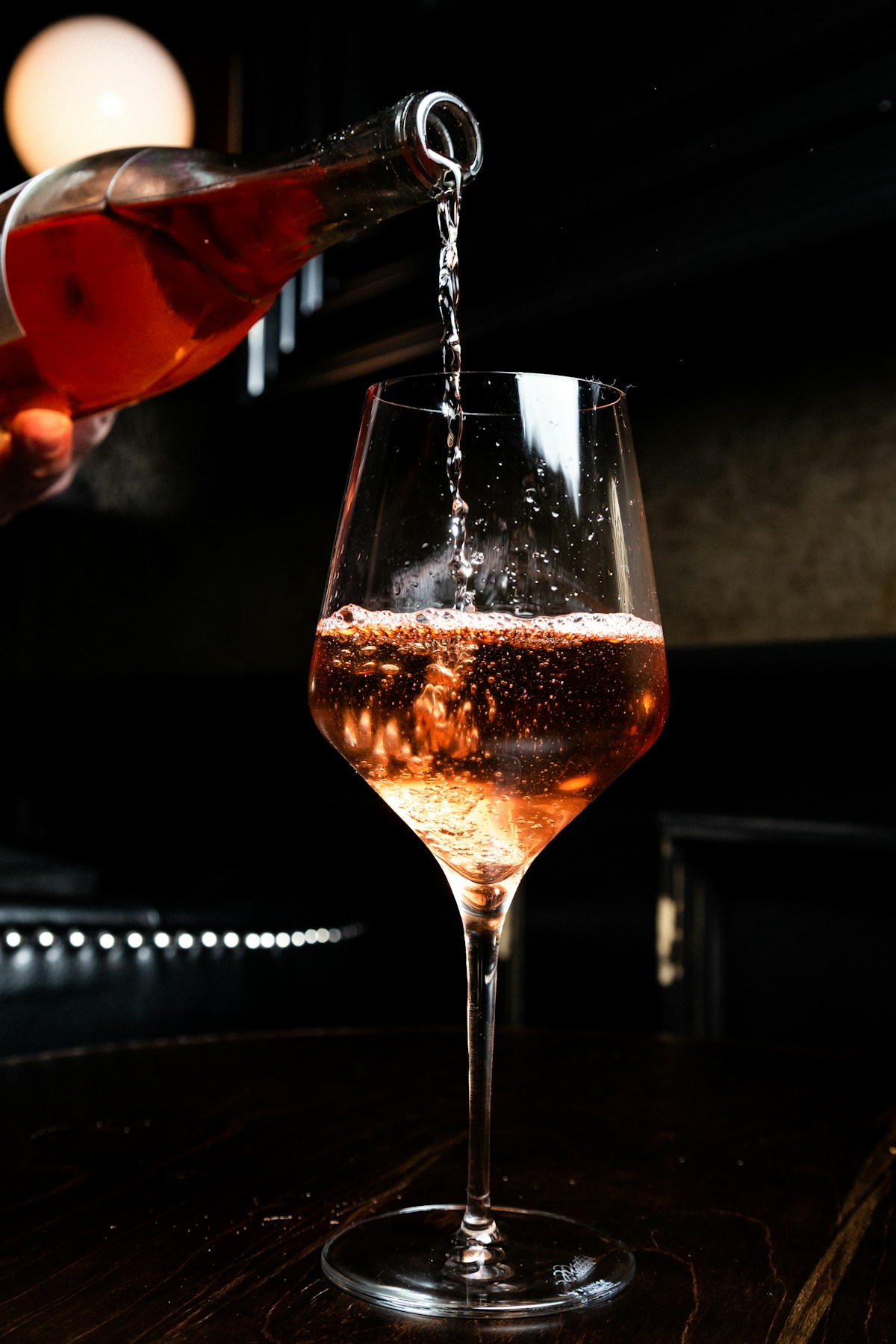
For aeration, you want a decanter with a wide bottom and a narrow neck. Pour the wine briskly — splash it, deliberately — into the wide section, where it has maximum surface area to breathe. Then let it sit for the right amount of time before service:
- Young, structured red (under ten years): Bordeaux, Barolo, Brunello, Napa Cabernet, Northern Rhône Syrah, Hermitage. 60-90 minutes.
- Medium-bodied young red (under five years): Chianti Classico, Rioja Reserva, Côtes du Rhône, young Spanish Tempranillo. 30-45 minutes.
- Young, structured white (under ten years): top white Burgundy, premier and grand cru Chablis, top Vouvray, top Auslese Riesling. 20-30 minutes. Yes — whites benefit from air. The professionals do this routinely; most home drinkers don't. It is the single most overlooked move in domestic service.
Three wines that should not be aerated:
- Pinot Noir of any vintage — it is too delicate. Pour into the glass and let it open there.
- Light, primary-fruited reds — Gamay, young Beaujolais, Mencía, Schiava. Same reason.
- Sparkling wine — for obvious reasons.
Job two — separating sediment
This is the older purpose of the decanter, and the one most people skip. Older bottles — typically reds past about a decade in the cellar — produce sediment: spent yeast, tannin polymers, pigment that has fallen out of solution. None of it is harmful. All of it is bitter and gritty if it ends up in the glass.
Decanting off sediment is a separate operation from aerating. You stand the bottle upright for at least twenty-four hours before service so the sediment settles to the punt. You open the bottle without shaking it. You pour gently and continuously into the decanter in front of a light source — traditionally a candle, in practice a phone flashlight behind the bottle's neck. You stop the moment you see the dark sediment line move toward the pour spout.
The decanter you use for sediment work should be narrower-necked than the one you use for aeration, because you are not trying to oxygenate; you are simply trying to clarify. Many serious collectors keep two: a Pinot-style wide-bowled decanter for young reds, and a tall narrow-necked one for old wines.
The hardest case — old wine
The most consequential decanting decision is also the most counter-intuitive: very old bottles, twenty-five years and older, should usually be decanted immediately before service, not an hour beforehand.
Old wines have been negotiating with their own micro-oxygen exposure through the cork for decades. They have grown accustomed to a near-anaerobic existence. Open the bottle, dump the contents into a decanter, and the sudden flood of oxygen can collapse the wine within ten or fifteen minutes — the aromatic structure dissipates, what was a luminous, ethereal mature wine becomes dull and dried out.
The protocol for old bottles in our service is: pour, taste, decide. If the wine is open and singing in the glass, leave the rest in the bottle and pour from the bottle for the rest of the meal. If it is tight, decant it then — for the sediment, primarily, and for whatever modest aeration it benefits from in the time before the next pour. Old wines are too fragile to assume.
What about the aerator gadgets?
The funnel-shaped, glass or metal device you pour the wine through on its way to the glass — they work, in the modest sense that they introduce more oxygen on the way in than a normal pour would. They are useful in the same way that an hour of decanting is useful: they shift a wine slightly toward openness.
What they do not do is replace the decanter. The two minutes of contact a wine has with the aerator on its way to the glass is not equivalent to the sixty minutes of contact a wine has in a proper decanter, regardless of what the marketing copy claims. Use them for a quick-fix on a young, tight Tuesday-night red. Use a real decanter when the wine deserves the time.
The minimum kit
If you only own one decanter, make it a moderately wide-bowled glass piece — something like a Riedel Cabernet or a Spiegelau Authentis decanter. Roughly 1-litre capacity, wide base, narrow neck. It will handle young Bordeaux, young Italian, young Napa — and at a push, fragile old wine too, if you decant immediately.
If you regularly drink mature wine — bottles fifteen years and older — invest in a second decanter built for sediment work: narrow neck, less aeration surface, easier to pour from. Riedel's "Mature" decanter is the type. Several glass houses make similar shapes.
The frequency question
How often should you decant? More than you do; less than the steakhouse sommelier does. A working rule: any structured red under ten years old, any high-end white under five years old, and any red over fifteen years old should be in a decanter or at least carafed before service. Everything else can go from bottle to glass.
The exceptions are the wines mentioned above — Pinot Noir, light reds, sparkling, very fragile aged wine. The exceptions are not "wines I want to drink quickly." The point of a decanter is to give a serious wine the dignity of a moment between bottle and glass. The point of the moment is to let the wine become itself.
SHE Nose Wines Editorial
West Palm Beach · May 2026