

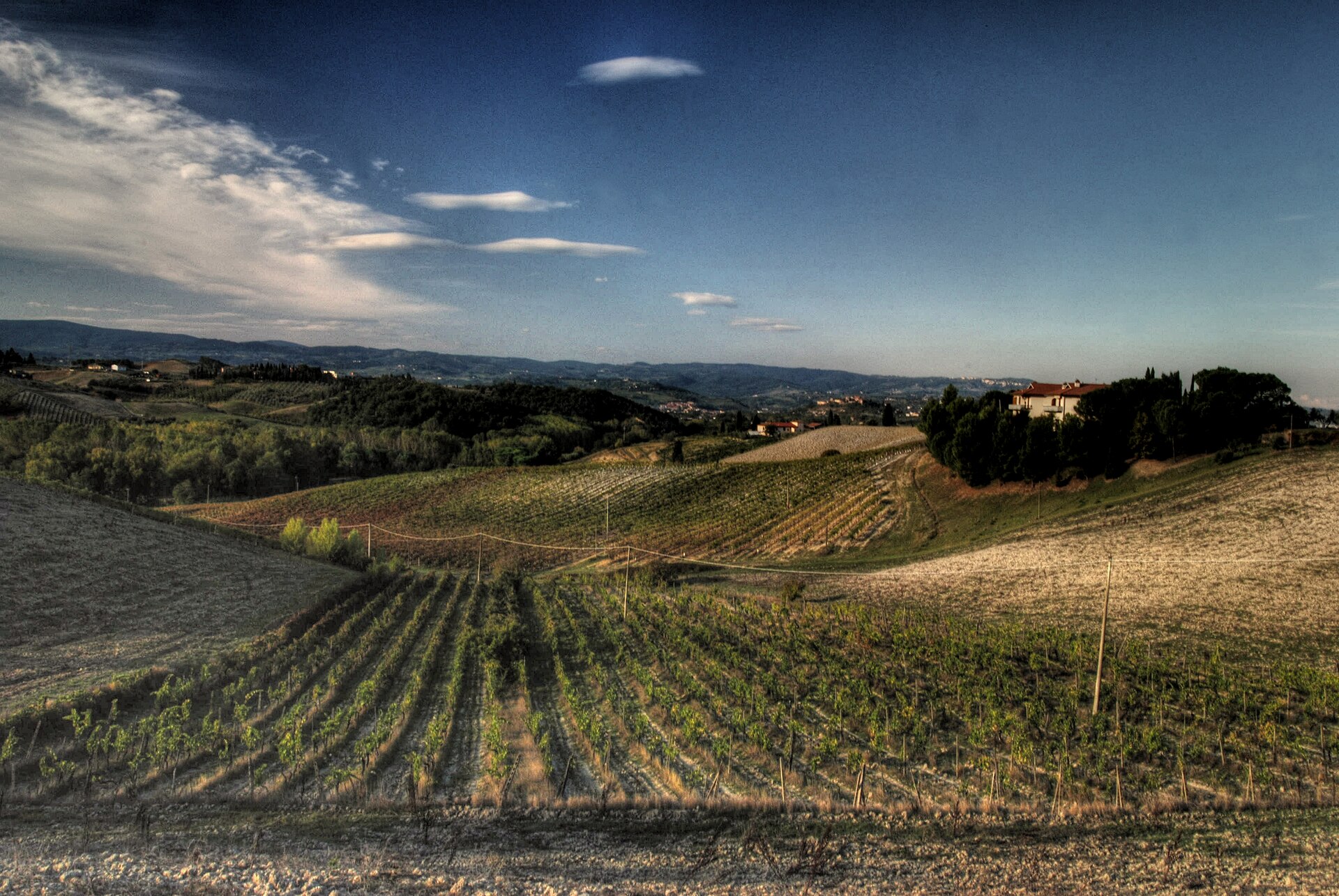
The Brunello di Montalcino DOCG was decreed in 1980, making it one of the first wines in Italy elevated to the country's top quality designation. Fifty years on, the appellation tells a story unique in Italian wine: a single hill town, a single grape (Sangiovese Grosso, known locally as Brunello), and an extraordinary expansion from roughly two dozen producers in the early 1980s to more than two hundred today. The wines have travelled from cult curiosity to American steakhouse staple to — now — one of the most diverse, terroir-articulate appellations in the country.
And yet a question has followed Brunello through every decade of its modern life: what, exactly, is it supposed to taste like?
The founding template
The wine that established Brunello's reputation — Biondi-Santi's bottles from the mid-twentieth century — was austere. High acid, firm tannin, dried-cherry and tobacco-leather aromatics, a colour that ran toward translucent ruby rather than deep crimson, and an ability to age for decades that put it in conversation with Barolo. The 1888 Biondi-Santi, opened ceremoniously at intervals over the past 130 years, remains a reference point for what a hundred-plus-year-old Sangiovese should be.
This template defined Brunello as a wine of patience: long aging, restrained extraction, slow oxidative development. Tradition in Montalcino, until very recently, meant Slavonian oak botti — large, neutral casks — for the mandatory two-year minimum oak ageing, then bottle ageing before the five-year-from-harvest release window the DOCG requires.
The modernist break
By the 1990s a generation of producers had begun to question whether austerity was the only authentic Brunello voice. Smaller French barriques replaced large Slavonian botti. Extractions grew darker, riper, more international. Critics — Robert Parker conspicuously — rewarded the bigger style with high scores. Prices followed. By the early 2000s Brunello had a stylistic split that mirrored the one playing out simultaneously in Barolo: traditionalists in one camp, modernists in the other, the trade press oscillating between them.
The split was disrupted, dramatically, by the 2008 Brunellopoli scandal — when several producers were investigated for the suspected use of non-Sangiovese varieties in wines required by law to be 100% Sangiovese. The episode forced a public reckoning with what Brunello was supposed to be, and how strictly the appellation would defend it. The consortium held its ground; the law was reaffirmed; the producers caught short adjusted or were sanctioned. In hindsight, Brunellopoli was the appellation's adolescence ending.
What Brunello is becoming
The fifteen years since have produced what may be the most coherent generation of wines in the appellation's history. The stylistic gap has narrowed without disappearing. The modernists have pulled back from the heaviest extractions; the traditionalists have admitted that some clean-flavoured smaller barrels do no harm. What replaces the old binary is something more interesting: terroir.
The hill of Montalcino is large enough — about 24,000 hectares, of which roughly 2,100 are planted to Brunello — to contain real climatic and geological variation. The northern side of the hill is cooler, the vineyards more shaded, the wines more aromatic and elegant. The southern slope, exposed to the warm air rising off the Maremma plain below, produces deeper, more powerful wines. The eastern and western flanks fall somewhere in between, with the south-east in particular (Castelnuovo dell'Abate) producing some of the most distinctive bottlings of the appellation.
What is exciting now is the move toward articulating these differences. Single-vineyard bottlings have proliferated. Producers from the cooler north — Le Ragnaie, Cerbaiona, Caparzo — produce wines noticeably distinct from the warmer south (Poggio di Sotto, Mastrojanni, Ciacci Piccolomini d'Aragona). The 2014 Brunello (a cool, rainy year that many panned at release) is now drinking beautifully where it was made carefully — vindicating the producers who held the line against over-ripeness when the vintage demanded restraint.
The identity question
And yet the underlying question persists. Brunello law requires 100% Sangiovese, a minimum of two years in oak, a minimum of four months in bottle, and a release no earlier than the January five years after harvest (six for Riserva). These are demanding requirements — among the strictest in Italy. They produce wines built for the cellar.
But the market that pays for those wines increasingly wants something else: approachability at release, dark fruit, soft tannin, fifteen-percent alcohol. The producers who lean into that market produce wines that score well, sell well, and look less and less like the austere, sour-cherry, terroir-driven Brunello that built the appellation's reputation. The producers who resist it produce wines that age beautifully and sell more slowly. This is the persistent identity question, and it is not going away.
The consortium's gentlest answer — a 2022 proposal to amend the regulations and allow earlier release — was withdrawn after producer pushback. For now the five-year hold remains. This is, in our reading, the single most important defensive policy of the appellation. Without it, Brunello becomes a fancier Chianti Classico. With it, Brunello remains one of the great cellar wines of Italy.
How to drink Brunello now
If you are starting:
- Begin with the 2019 vintage on release (currently arriving in the US market). It is a balanced, classic year — perfumed, structured, not over-ripe. Most producers performed well.
- Look at the 2016, where you can find it — almost universally considered the great modern vintage. Drinkable now; better in five years.
- Avoid 2017 and 2022 at the top of your list — both hot years where some producers struggled with concentration over balance.
- Buy 2014 from careful producers for current drinking — the harvest's reputation has been rehabilitated and the wines are gentle, savoury, and surprisingly affordable.
Houses worth knowing
The Traditionalists — Cool North
Biondi-Santi (the original), Soldera (now Case Basse di Gianfranco Soldera), Cerbaiona, Salvioni, Le Ragnaie. These are the producers making the most aromatic, ageable, and (where you can still source them) age-worthy bottles in the appellation.
The Articulators — Single-vineyard work
Stella di Campalto, Poggio di Sotto, Mastrojanni, Il Marroneto. Producers using single-vineyard bottlings to express Montalcino's geological variation. The best entry point to understand the appellation as terroir, not just style.
The Modern Classicists
Casanova di Neri, Argiano, Tenuta San Guido (for the Brunello, not their more famous Bolgheri work), Conti Costanti. Producers who modernised cleanly without losing the appellation's structural identity. The reliable cellar buys.
The next fifty years
Climate change is the unanswered question hanging over Montalcino's next half-century. The vineyards on the warmest southern slopes are already, in the hottest vintages, producing wines that taste closer to Tuscan Maremma than to classic Brunello. The growers who matter are responding — higher elevations are being planted, north-facing parcels are appreciating, picking dates are moving earlier. None of this is enough on its own; all of it together may keep the appellation legible.
The wine, for now, remains one of the great cellar buys of the world. The five-year hold, the 100% Sangiovese rule, and the still-relatively-honest pricing relative to the great Bordeaux and Burgundy houses mean that a buyer with patience can still build a serious Italian cellar without the absurd outlays the French regions now demand.
We are working closely with three Montalcino producers on direct allocations for our clients — north, south, and east of the hill. If you would like to taste through a side-by-side of the styles in a focused private session, tell us, and we will set one up.
SHE Nose Wines Editorial
West Palm Beach · May 2026